Castellammare di Stabia
Castellammare di Stabia is located in the southern part of the metropolitan city of Naples, in the area between the end of the Vesuvian zone and the beginning of the Sorrento peninsula. Thanks to its particular geographical position, it offers climatic conditions that favor a mild and temperate climate, typical of marine and hilly areas: in the hottest months, the average temperature is 25°C, while in the coldest months it is 16°C.
The eruption of '79
On August 25, 79 AD, an unexpected and violent eruption of Vesuvius buried the city of Stabiae under a thick blanket of ash, lapilli, and pumice, together with Pompeii and Herculaneum. Due to the frequent earthquakes that had preceded the eruption, many villas showed signs of subsidence or cracks and were therefore under renovation: this was the reason why there were a limited number of victims in Stabiae. Among the illustrious victims was Pliny the Elder, who, having arrived in Stabiae to observe the eruption more closely, most likely died poisoned by toxic gases on the beach.
The Duomo
the nativity scene of the Duomo is set up with about 70 shepherds ranging from 90 to 150 centimeters, dating back to the 17th, 18th, and 19th centuries.
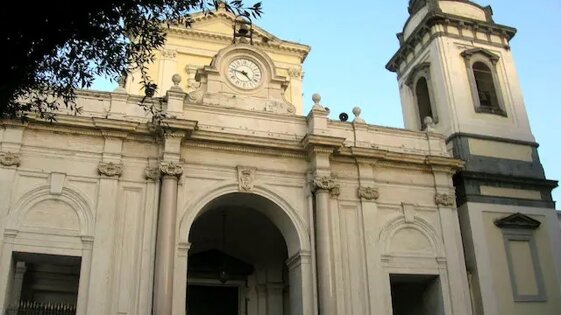
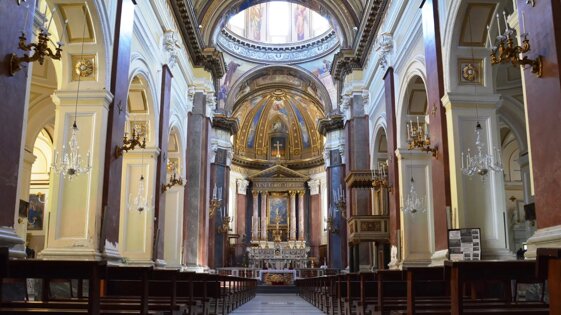
The main church is the Co-Cathedral of the Most Holy Mary of the Assumption and Saint Catellus, whose construction dates back to 1587, while the solemn consecration took place only in 1893, although it had already been used since 1643. The basilica, in the shape of a Latin cross, is divided into three naves, one central and two lateral, on which five chapels open, including the one dedicated to the patron saint of Stabia, Saint Catellus; it was precisely during the construction of this chapel, in 1875, that archaeological finds and structures attributable to necropolises, roads, houses, and shops dating back to the Roman era were discovered. Among the main works preserved inside are the Deposition and the Nativity by Spagnoletto, a paleochristian sarcophagus used as an altar in the chapel of Saint Catellus, a statue of Saint Michael the Archangel from the medieval period and previously housed in the sanctuary of Saint Michael at Faito, as well as paintings by Domenico Morelli, Francesco De Nicola, Angelo Mozzillo, Giacinto Diano, Giuseppe Bonito, Nunzio Rossi, and Vincenzo Paliotti. During the Christmas period,
The Palace and the Museum
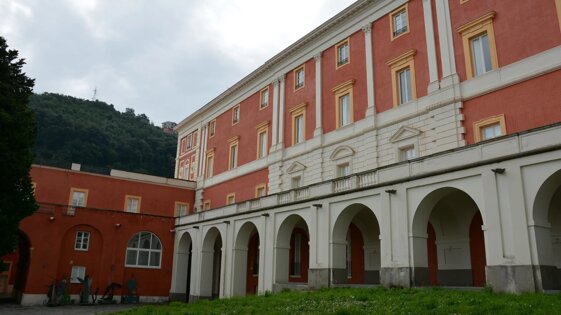
The exact date of the construction of the Reggia di Quisisana is still shrouded in mystery: it is certain that in 1268 the house of King Charles I of Anjou already existed on the Quisisana hill, but since the Angevins had conquered the Kingdom of Naples only two years earlier, it is possible that it dates back to the Swabians. Dominating the city, the palace is made up of three buildings: the first, on two levels, is the one that allows access to the structure through a large portal. The first floor was the main floor that overlooked the park directly. The second building is located perpendicular to the entrance, on the edge of the hill, also on two levels with the addition of the attic. Finally, the third part descends along the slope of the hill and is characterized by the presence of a portico. Inside the palace there is an Italian-style garden.
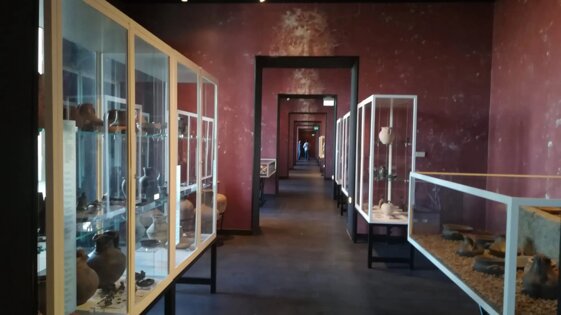
Over the course of its history, many personalities lived in the palace, from Joseph Bonaparte to Joachim Murat to the Bourbons: even Caroline Bonaparte, Napoleon's sister, stayed there for a long time. With the unification of Italy, the estate became one of the Reserved Assets of the House of Savoy, and was later transferred to state property. In 1879 it was purchased by the municipality and leased the same year to private individuals who transformed it into a hotel, called Royal Hotel Quisisana. At the end of the 1960s, after being used as a hospital for a very short period, the palace was abandoned. Serious damage was added to that caused by neglect and water infiltration, following the Irpinia Earthquake of 1980, causing the partial collapse of some walls, floors, and stairs: meanwhile, ornaments and stuccoes were completely lost. Reduced to a state of ruin, after a series of careful studies, restoration work began and was completed in 2008. The palace is partly used for the restoration school, and partly as a museum for the exhibition of artifacts from the Stabiae excavations.
Archaeology
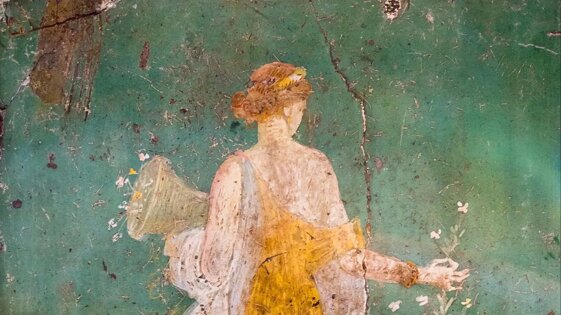
Today's Castellammare di Stabia was one of the favorite destinations of Roman patricians, so much so that its territory was dotted with numerous residential villas. Discovered in 1749 by Bourbon excavators, Stabiae, from the very beginning, stood out as a place of excellence: however, the exploration of the city lasted only a few years, so much so that by 1782 all excavation activities were moved to Pompeii, so that villas, houses, and streets returned underground while frescoes, statues, and precious furnishings were collected in the Bourbon Museum. After its abandonment, in 1800, there were various discoveries that kept the memory of Stabiae alive: however, it was only in 1950 that two villas, Villa San Marco and Villa Arianna, were partially brought to light by principal Libero D’Orsi. The two villas can be visited every day and one can appreciate the design skills of the Roman architects who built them with bold technical solutions and perfectly integrated the villas into the landscape. Today, the site of Stabiae is at the center of a major international project that involves the creation of an archaeological park together with the University of Maryland, through the Restoring Ancient Stabiae foundation: one of the foundation's fundamental steps, together with the Archaeological Superintendency of Pompeii, was an exhibition called Otium Ludens, from December 2007 to March 2008, at the State Hermitage Museum in St. Petersburg, which gathered about 200 artifacts including furnishings and frescoes from Stabiae. This exhibition will continue in other parts of the world in the future.
The Cave of San Biagio is an ancient Christian temple, carved into the tuff rock at the foot of the Varano hill: most likely, it was originally a quarry created by the ancient Romans to build their villas by extracting blocks of tuff. At first, there was a Roman temple dedicated to Mithras, while in the early centuries of Christianity it became a catacomb. It was only from the 6th century that it became a church, dedicated to Saints Jason and Maurus, home to a Benedictine community dependent on the monastery of San Renato in Sorrento. Inside there are frescoes of considerable size, beautifully preserved, executed between the 6th and 14th centuries: the cave is closed to the public. Inside, a statue was found, perhaps depicting Saint Blaise, which is now kept at the Diocesan Museum of Castellammare di Stabia.

The monuments
The Bandstand
Monument to the Fallen
The Rovigliano Rock
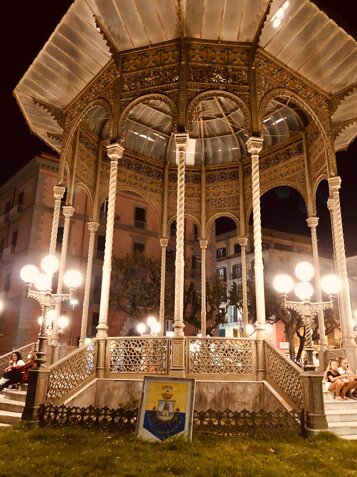
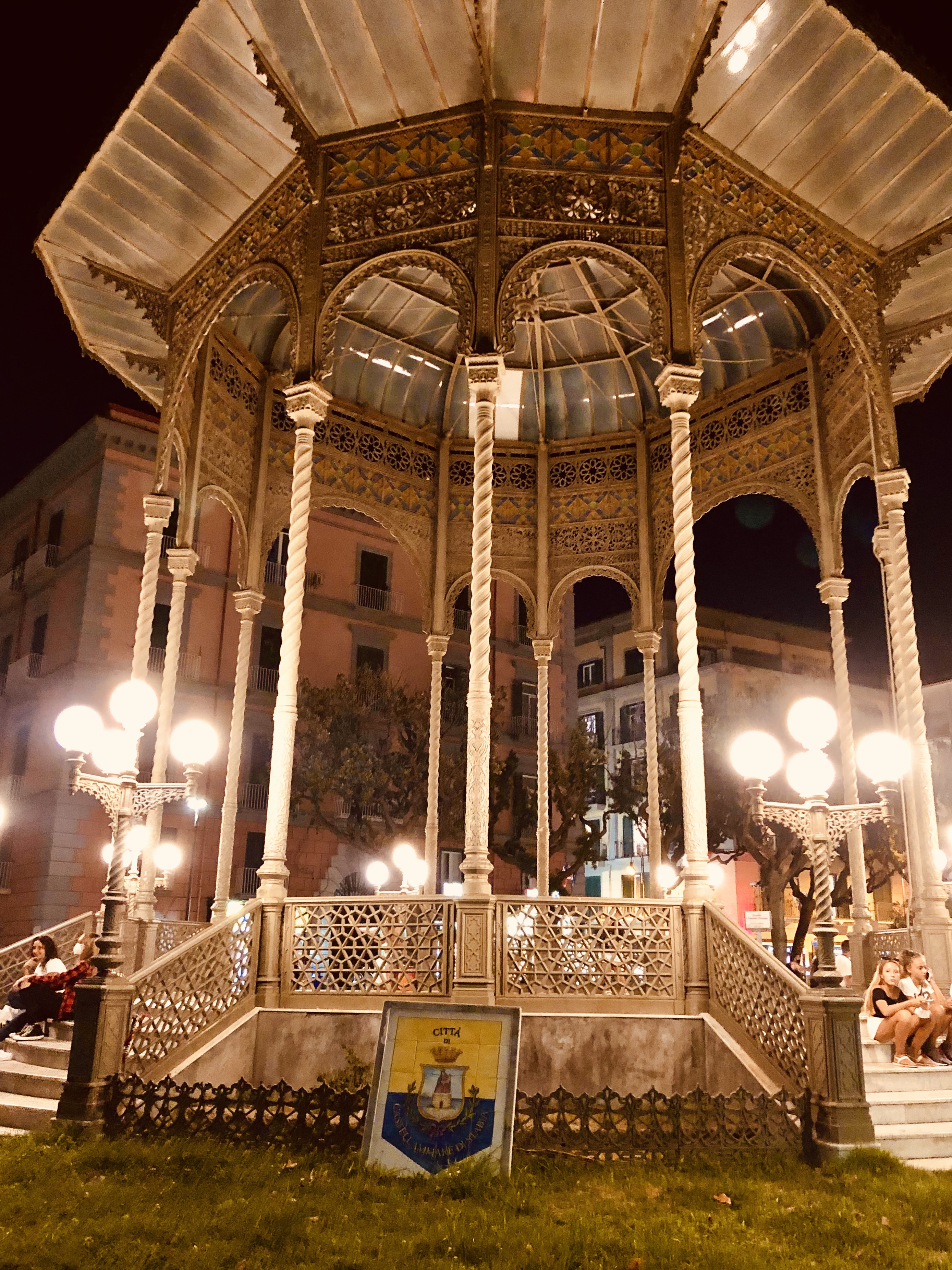
The bandstand, or music pavilion, was built by the Minieri company of Naples, based on a design by architect Eugenio Cosenza. Inaugurated on April 28, 1900, only 9 years later, due to a violent southwesterly wind, the bandstand collapsed. For its reconstruction, Eugenio Cosenza was called upon once again; this time he lowered its height, created a vent at the top, and the arches took on an arabesque shape: the new structure was handed over to the municipality of Castellammare di Stabia on August 4, 1911. Over the years it has undergone several restorations, both in the 1990s and in 2004. The bandstand hosts various concerts as well as events.
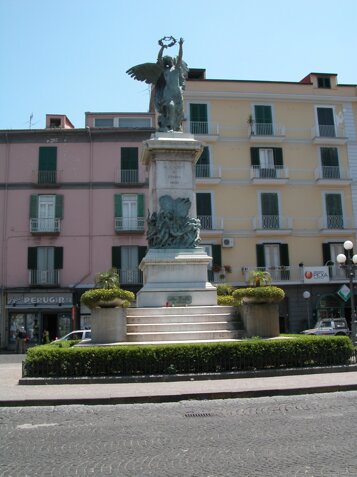
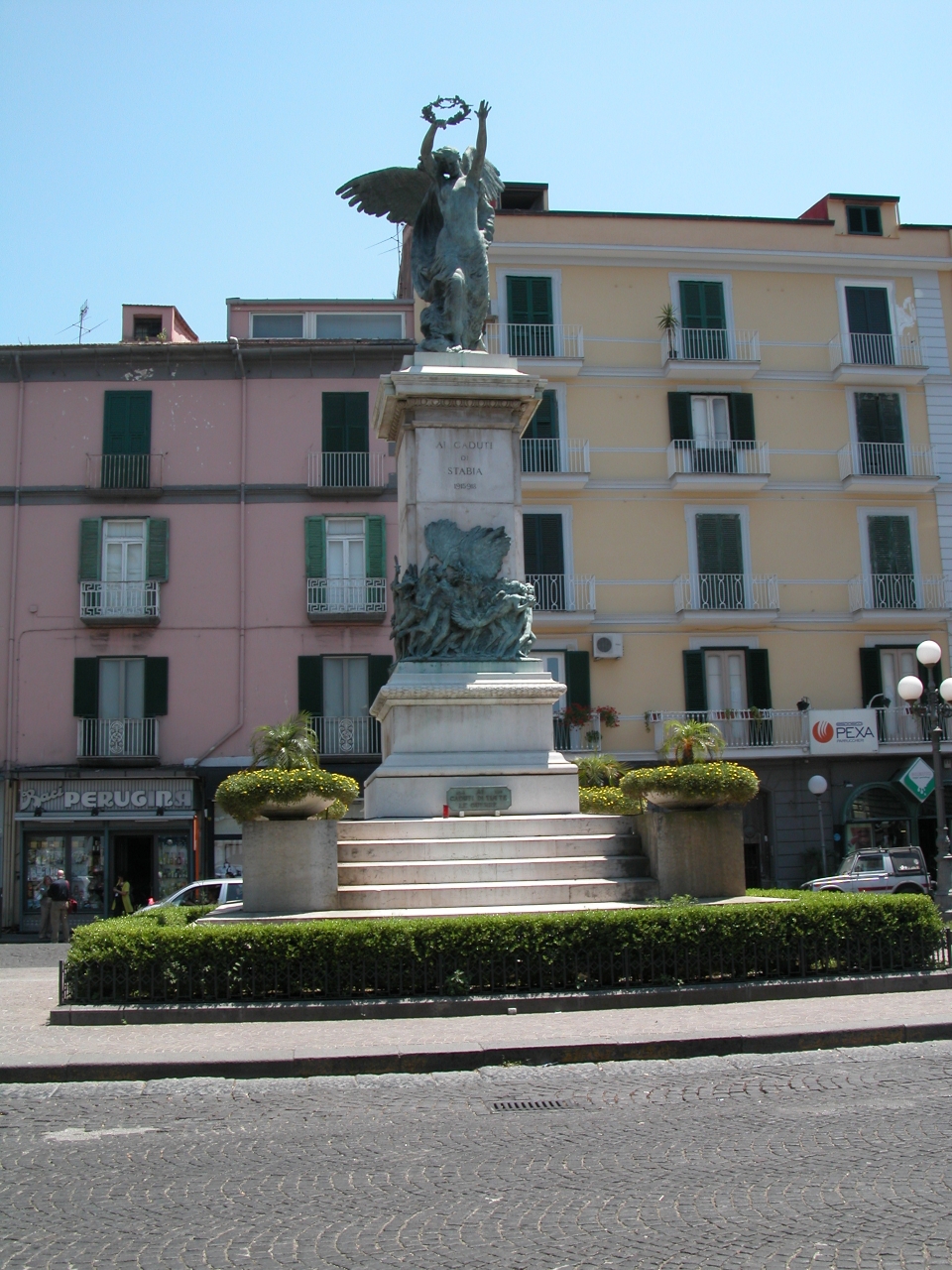
Created by the sculptor Giuseppe Renda: everything was ready for the inauguration on October 28, 1928, when the bishop of the time refused to attend because the monument featured images depicting naked men. The monument remained covered for about three years because both the bishop and the sculptor (who did not want to modify his work) refused to find a compromise. The situation changed only when the president of Catholic Action convinced Giuseppe Renda to modify the sculptures: the monument was finally inaugurated in 1931, in the presence of all the authorities. The work represents the Winged Victory. Every April 25, a solemn ceremony is held at the foot of the statue to commemorate the liberation of Italy.
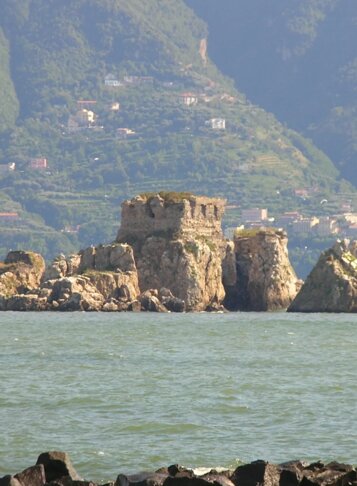
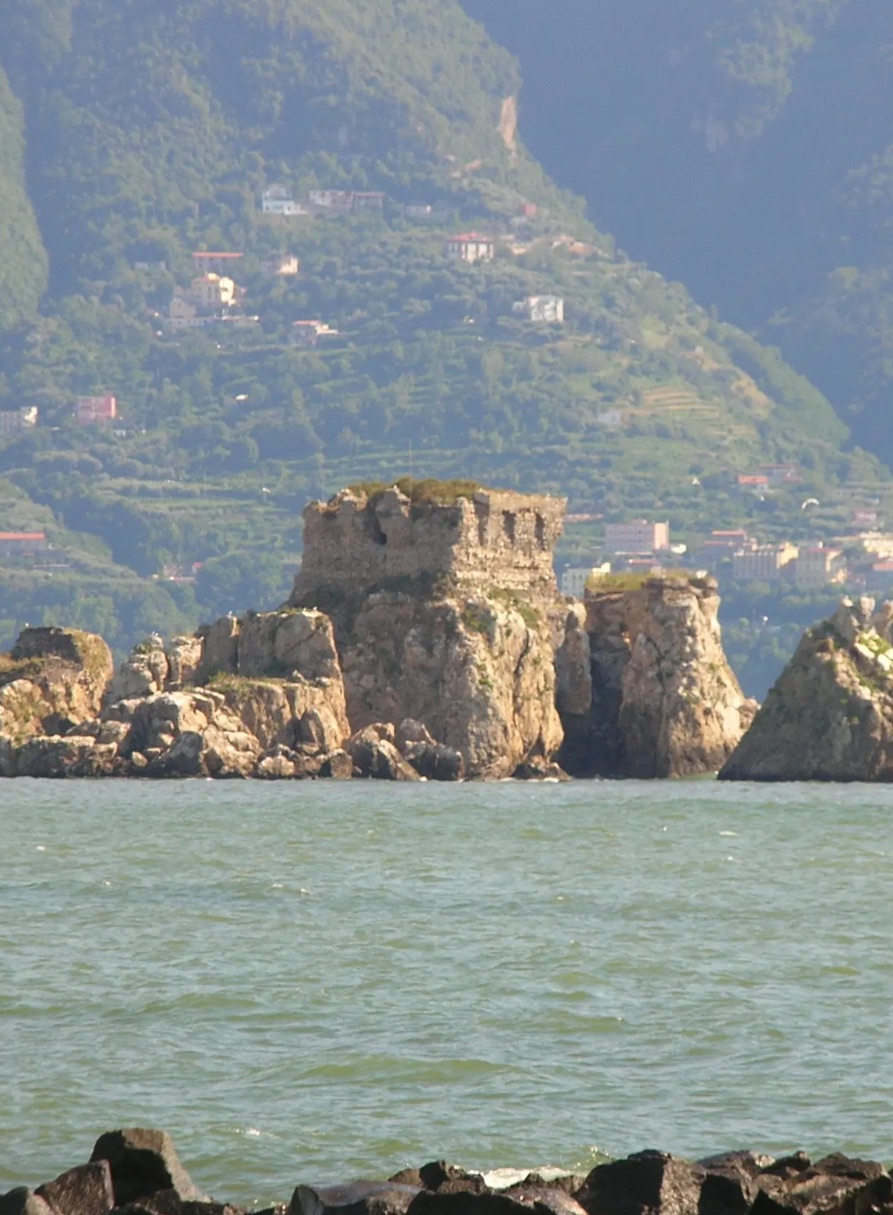
Formed from limestone and covered by eruptive deposits due to its proximity to Vesuvius, the Rovigliano rock is located in the sea, right in front of the mouth of the Sarno river, on the border between Castellammare and Torre Annunziata. The name Rovigliano is thought to derive from the surname of a Roman family, the Rubellia, who built a villa d’otium there, a typical construction of the area. Before the arrival of the Romans, the rock is believed to have been a Phoenician emporium or a temple dedicated to Hercules; in fact, it was then called Petra Herculis. In 938 AD, a convent was built there, while in 1564, it was transformed into a fortress against Turkish pirate raids.